How to create an intro, verse, chorus, bridge and outro (Suno v6)
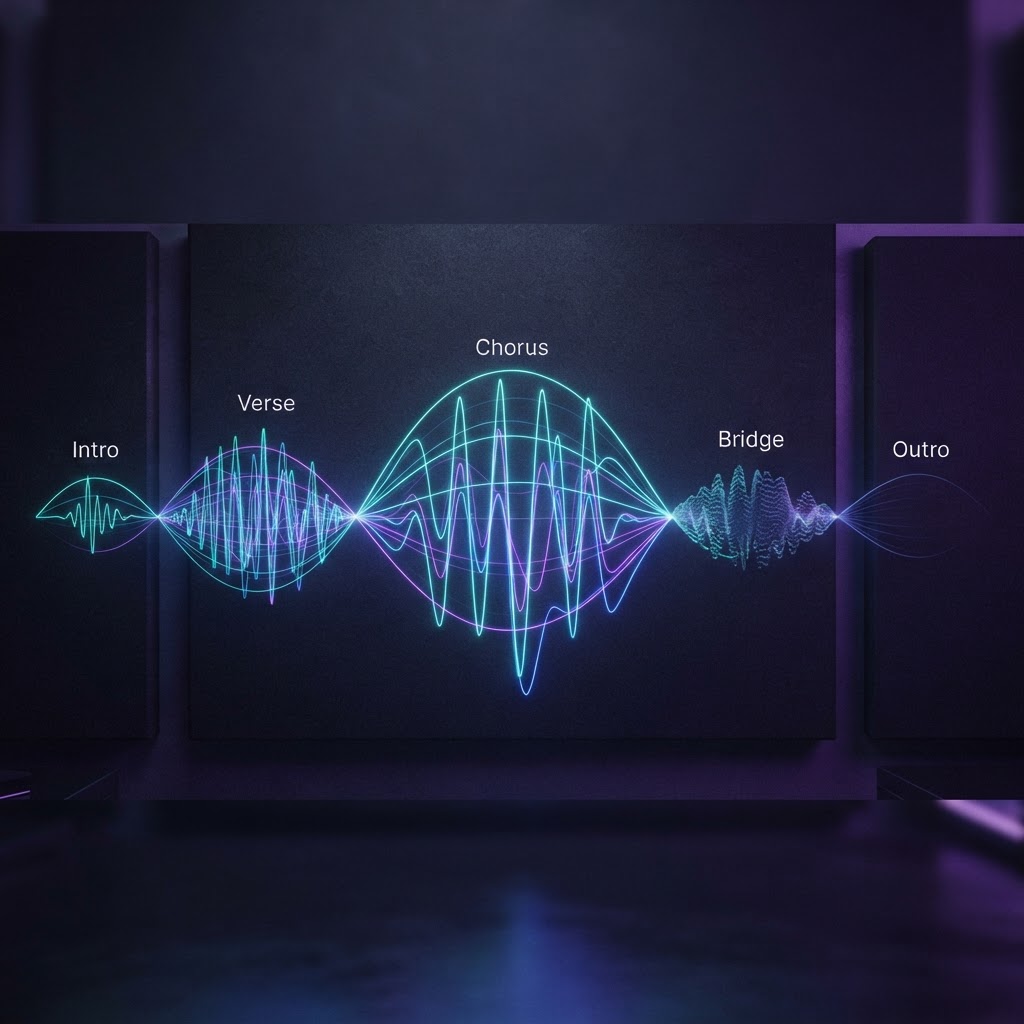
A clear structure gives a generated song direction: the opening sets a scene, verses develop it, the chorus delivers the central hook, and the ending feels intentional. For a Suno v6 song structure, write section labels in the lyrics field and pair each with concise lyrics or a specific instrumental cue. The labels guide the generation; they do not guarantee an exact arrangement, so listen and refine.
1. Plan the song’s emotional arc
Before writing lines, decide what changes between the beginning and end. A useful structure gives each section a distinct job, rather than repeating the same idea with new words.
For a compact pop song, start with this map:
| Section | Main job | Typical direction | |---|---|---| | Intro | Establish mood, rhythm, or a motif | Sparse or instrumental | | Verse | Add story, detail, or perspective | More specific than the hook | | Chorus | State the central idea memorably | Repeated lyric and stronger lift | | Bridge | Introduce contrast or a new angle | Change harmony, rhythm, or viewpoint | | Outro | Resolve, echo, or deliberately fade | Reduce, repeat, or land firmly |
There is no required duration for each part. A short song might move from intro to verse and chorus quickly. A longer arrangement can repeat a chorus or add a second verse. Choose based on the story and style, not a fixed template.
2. Write section labels and cues for Suno v6 song structure
In Custom mode, put lyrics and section labels in the lyrics field, then describe the overall sound in the style field. Suno describes v6 as understanding musical structure and language, but labels are guidance rather than rigid commands. Keep the style description focused on genre, instrumentation, vocal character, and energy.
A simple lyric scaffold might look like this:
[Intro]
Soft piano motif, no vocals

[Verse 1]
Streetlights blur against the rain
I take the long way home again

[Chorus]
Leave one light on for me
Somewhere I can still be free

[Verse 2]
The morning finds the empty train
Your old song circles back again

[Chorus]
Leave one light on for me
Somewhere I can still be free

[Bridge]
Maybe home is not a place
Maybe it is one familiar face

[Final Chorus]
Leave one light on for me
Somewhere I can still be free

[Outro]
Piano motif returns, vocals fade
Use bracketed labels on separate lines and keep each section’s cue brief. If the intro should be instrumental, say so plainly. If the outro should repeat a phrase or end with a clean stop, specify that too. Avoid placing production instructions between lyric lines, where they may be interpreted as words to sing.
Tempo, as measured in this article's example.
3. Make the intro and verses lead somewhere
An intro should establish one or two musical ideas without delaying the song’s central premise. A short motif, texture, or vocal pickup can be enough. If the lyrics matter immediately, begin with the verse instead of forcing an instrumental opening.
Verses move the song forward through new information. Give each one a different image, event, or realization. Keep the line lengths and stresses reasonably consistent if you want the vocal phrasing to feel related. A verse that simply restates the chorus usually makes the song feel static.
For generation, describe the opening and verse contrast in a small number of cues. For example: “four-bar muted guitar intro; intimate, conversational first verse.” Too many simultaneous directions can compete. A plain, concrete instruction is easier to evaluate than a list of moods that pull in different directions.
4. Build a chorus that earns its return
The chorus should express the song’s core thought in language listeners can remember. Give it a distinct melodic or energetic role, but do not assume that adding words such as “powerful” will create a specific musical result. State what should change: fuller drums, wider backing vocals, higher register, or a repeated hook.
Repetition helps establish the hook, while a small variation can make a later chorus feel developed. Keep the key phrase stable enough to be recognizable. If every line introduces a new metaphor or idea, the chorus may lose focus.
Use the same chorus text when you want a clear repeat. If the final chorus should change, label it and write the changed line explicitly. Do not rely on the model to invent the lyrical development you have not specified.
5. Use the bridge and outro to shape the ending
A bridge works best when it changes the listener’s perspective or the music’s feel. It might reveal a new fact, question the chorus, or strip the arrangement back before the final return. If it sounds like another verse, change its point of view, lyrical function, or arrangement cue.
The outro should make the ending audible in the lyrics or direction. Ask for a repeated hook, a return to the intro motif, an instrumental tail, or a definite final hit. A label alone may not produce the exact duration or ending behavior you imagined. Listen to the generated result and check whether the final section resolves rather than stopping mid-thought.
6. Refine the sections that miss
Treat the first generation as a draft. Listen for whether the section boundaries make sense, the chorus arrives at the right moment, and the ending sounds intentional. Also check whether the vocal sings instruction text, skips a section, or changes the hook unexpectedly.
Make one targeted revision at a time. If the chorus needs more lift, change its cue or arrangement direction without rewriting every verse. If a lyric is awkward, simplify its stresses or syllable count. Suno’s v6 editing tools include ways to revise parts of a song, though availability and interface details can depend on the account and current product version. When editing, preserve the sections that already work and compare alternatives by listening, not by labels alone.
7. Tools
Valkat Studio covers AI-assisted lyrics, Suno prompts, vocal profiles, mastering, cover art, and music videos. Its mastering suite is part of that toolkit, alongside the Valkat Studio production workspace.
8. Final thoughts
A successful structured generation has an opening that establishes its world, verses that add meaning, a chorus with a clear center, and an ending that feels chosen. The most common misjudgment is treating section labels as instructions the model must follow exactly. They are useful signposts, but the lyrics, musical cues, and generated performance all affect what you hear. Judge the finished song by its flow and emotional clarity, then revise the one section that weakens that experience. A concise structure with purposeful contrast often works better than adding sections simply to make the arrangement look complete.